Emotional Safety in Relationships: Why It Matters More Than Romance
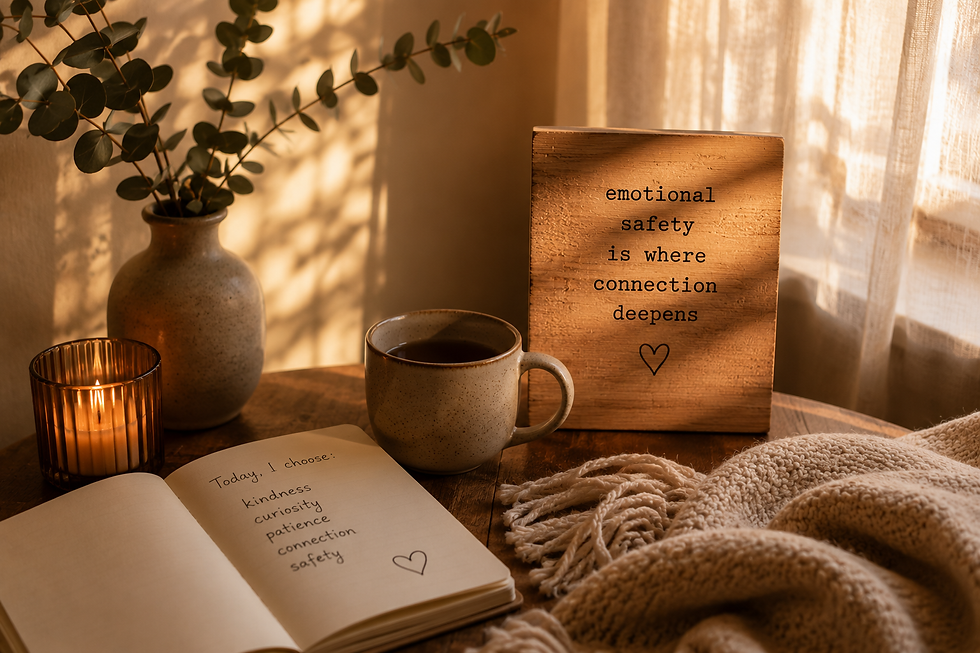
Romance is often associated with intensity.
Grand gestures.
Butterflies.
Electric chemistry.
The feeling of being swept up.
But for many couples, what sustains connection over time is not intensity.
It is safety.
Not safety in the dramatic sense. Not protection from the outside world. But emotional safety, the quiet experience of knowing:
I can be myself here.
I can speak honestly here.
I am not walking on eggshells.
I will not be punished for vulnerability.
And increasingly, in modern relationships, emotional safety is becoming more important than spark.
Emotional Safety in Relationships Is Not the Opposite of Passion
There is a common myth that safety makes relationships boring. If things feel calm and predictable, desire will disappear. But safety does not remove passion.
It removes fear.
When we feel emotionally secure, our nervous system softens. We are more open. More playful. More willing to take risks, even romantic ones.
In contrast, when emotional safety is unstable, even small conflicts can feel threatening. And when a threat enters the relationship, the body shifts into defence, not desire.
You cannot relax into intimacy while bracing for impact.
What emotional safety actually looks like
Emotional safety is rarely dramatic. It shows up in small, consistent ways.
It sounds like:
“I’m listening.”
“Help me understand.”
“I didn’t realise that hurt you.”
“Thank you for telling me.”
It feels like:
Not being mocked for sensitivity.
Not being dismissed for having needs.
Not being criticised for expressing doubt.
It means that conflict does not automatically threaten connection. And over time, these micro-moments build trust.
When safety is missing
Couples rarely announce, “We lack emotional safety.”
Instead, it shows up as:
Sarcasm that cuts a little too deep.
Interruptions during vulnerable conversations.
Eye-rolling instead of curiosity.
Silence where reassurance is needed.
None of these may seem significant in isolation. But intimacy erodes quietly.
When someone feels consistently misunderstood or dismissed, they begin to withhold. And when withholding becomes habitual, connection thins.
It is not always a dramatic rupture that weakens intimacy. Often, it is repeated small moments of feeling alone in the relationship.
Why modern relationships need more safety than ever
Today’s partnerships often carry more emotional expectations than ever before.
We look to our partners not only for stability, but for:
Emotional attunement.
Shared growth.
Sexual fulfilment.
Companionship.
Friendship.
Validation.
With so much resting on one relationship, emotional safety becomes essential. Without it, conversations feel risky. With it, even difficult topics can be explored gently.
Safety invites desire
Desire does not thrive under criticism. It does not flourish in environments of tension or unpredictability.
When someone feels emotionally secure, when they feel chosen, respected, and heard, their body relaxes. And in that relaxation, openness becomes possible.
Sometimes couples focus on reigniting chemistry without realising that safety is the soil from which desire grows.
When safety deepens, desire often follows, not because it is forced, but because it is no longer inhibited.
A quiet shift in perspective
Perhaps romance is not only about excitement. Perhaps it is about being deeply known without fear.
Being able to say:
“I’m struggling.”
“I’m insecure.”
“I’m unsure.”
And knowing the response will be care, not criticism. Emotional safety does not make love less passionate. It makes it sustainable. And in long-term relationships, sustainability is often the truest form of romance.


Comments